Over the two decades before the story
Luparello’s rise to power
Silvio Luparello built a political network while maintaining the posture of a modest servant of the public. By the time he stepped into the open, his influence reached across his party and a vast share of public and private contracts in the province.
The political upheaval of the [Mani Pulite](entity:time-recall-time-mani-pulite-559effeaf1d1) years did not dislodge him. Instead, Luparello reinvented himself as a standard-bearer for renewal, and his elevation to provincial secretary came only days before his death.
About a year before the investigation
The Pasture’s transformation
The arrival of soldiers sent to help control Sicily’s territory created a new market at the [Pasture scrubland](entity:location-recall-location-2f9e56ffd75f). Gegè Gullotta used his connections to establish a clandestine business in sex and light drugs, protected by the officials who took a share of its proceeds.
The place became a crowded, makeshift world of prostitutes, visitors, and soldiers. Its reputation as a setting for furtive encounters would later make the circumstances of Luparello’s death seem plausible even when they did not fit the man.
The eight months before the investigation
The gang war
A violent territorial war broke out between the [Cuffaro gang](entity:organization-recall-organization-9f0b5fe6096d) in [Vigàta](entity:location-recall-location-vig-ta-f6ca09869247) and the [Sinagra gang](entity:organization-recall-organization-80bde7e7810d) from [Fela](entity:location-recall-location-707c87b18691). The killings followed a grim pattern, with victims taken in turn from each side.
The latest killing had been in Fela, so Montalbano initially assumed the newly discovered corpse might be the next move in the cycle. That expectation would prove misleading, but the violence remained an ever-present danger around the investigation.
Before the body is discovered
Nenè’s unexplained illness
Saro Montaperto’s infant son, Nenè, was gravely ill, sleeping only in short stretches and suffering from a condition that local doctors could not explain. His parents lacked the money to seek help from a specialist elsewhere.
The child’s suffering shaped Saro’s later decision about the valuable necklace he found. He and his wife hoped its reward might pay for treatment, even as they struggled to remain honest about an object that was not theirs.
About six months before the investigation
Contino’s earlier suicide attempt
During one of Montalbano’s walks by the sea, he found the elderly schoolteacher Giosuè Contino poised to jump from the breakwater. Contino said he wanted to die because he believed his elderly wife was having an affair with a former postman.
Montalbano stopped him and walked him home, but treated the old man’s suspicions more lightly than their danger warranted. The memory would later return with painful force when Contino acted on his jealousy.
Sunday evening, before the body is found
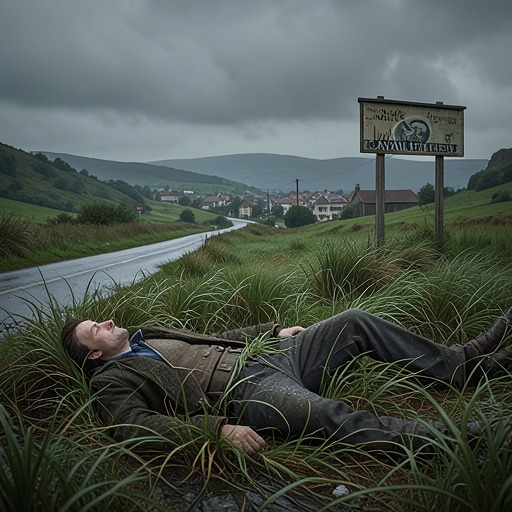
The body in the cottage
Luparello went to his private cottage at [Capo Massaria](entity:location-recall-location-capo-massaria-7020d65d32d7) for a secret sexual encounter. The person with him was his nephew Giorgio Zicari, whose devotion to his uncle had become an intimate, consuming attachment.
During or immediately after the encounter, Luparello’s failing heart gave out. His death was natural, but the circumstances threatened to expose a private relationship that Giorgio believed would destroy his uncle’s public memory.
Sunday night
Giorgio moves the body
Overwhelmed by grief and fear of scandal, Giorgio dressed the body in haste and tried to remove it from the cottage. He used his neck brace to disguise the dead man’s appearance and moved him in Luparello’s BMW toward the [Pasture scrubland](entity:location-recall-location-2f9e56ffd75f).
Giorgio’s panicked effort to protect his uncle’s reputation left visible irregularities, including the clothing put on backwards. He did not understand that his attempt to conceal the death would give others an opportunity to exploit it.
Sunday night, after Luparello dies
Rizzo seizes an opportunity
Pietro Rizzo learned of the death and recognized a chance to reshape the political succession. Rather than simply hide the compromising circumstances, he turned them into leverage against the party’s rival factions and against the family of Dr. Cardamone.
Rizzo’s men helped make the death appear to be a sordid encounter at the [Pasture](entity:location-recall-location-pasture-f19c35322238). The staging would implicate Ingrid Sjostrom, using her possessions and reputation to connect her to Luparello and to leave Cardamone vulnerable to political pressure.
Late Sunday night
The BMW reaches the Pasture
The BMW arrived at the [Pasture](entity:location-recall-location-pasture-f19c35322238) by way of the rough [Canneto riverbed](entity:location-recall-location-bb75b2184d19), a route that should have damaged an ordinary driver’s car. Witnesses later recalled a woman driving and a man in the passenger seat, but the apparent couple was part of the deception surrounding the corpse.
The car stopped beside a dense bush, positioned in a way that could not be explained by an ordinary approach from the provincial road. That detail would become one of Montalbano’s first reliable reasons to distrust the apparent story.
Late Sunday night or early Monday
The necklace is planted
The [Heart-shaped diamond necklace](entity:object-recall-object-heart-shaped-diamond-n-78bfc6810d65) was left near the factory wall, where it could be found by someone working in the scrubland. Ingrid’s handbag was thrown over the wall into the [Abandoned chemical factory](entity:location-recall-location-34e8670d6213), weighted with stones and stripped of its identifying initials.
Together with the clothes left in Luparello’s cottage, the objects were meant to form a trail toward Ingrid. Their placement made the story look increasingly convincing while concealing the fact that the evidence had been arranged.
Early Monday morning
Pino and Saro are assigned the Pasture
After two fellow workers were arrested for attempting a supermarket robbery, foreman Pecorilla assigned Pino Catalane and Saro Montaperto to clean the [Pasture](entity:location-recall-location-pasture-f19c35322238). The two educated temporary workers expected the area to be filthy after the soldiers’ days off.
The assignment placed them at the center of a discovery that would draw them into the political machinery surrounding Luparello. Their ordinary work brought them into contact with both the corpse and the planted necklace.
Early Monday morning, before the discovery
Saro checks on his son
On the way to work, Saro stopped at home to see how Nenè was doing. His wife Tana reassured him that the fever seemed to be falling, though the child remained gravely ill.
The brief visit sharpened the stakes of what Saro would find later that morning. The prospect of money for treatment would make the necklace both a temptation and a test of the family’s honesty.
Monday morning
Saro finds the necklace
While cleaning near the factory’s rear entrance, Saro saw a large diamond-studded heart pendant on a broken gold chain. He pocketed it instinctively and saw no one nearby.
The discovery was not chance in the larger scheme: the necklace had been left where a worker might find it. Saro did not yet know that its apparent owner, its location, and its timing had been arranged to implicate an innocent woman.
Monday morning
Pino and Saro find Luparello
Pino noticed a green BMW partly concealed in the bushes and, with Saro, discovered a dead man in the passenger seat. They recognized the body as Silvio Luparello, an influential local politician, and froze in fear.
The corpse’s disordered clothes and exposed body suggested a sexual encounter, while the locked car and remote location raised immediate questions. The two workers had stumbled into a death that powerful people wanted quickly forgotten.
Monday morning, just after the discovery
The call to Rizzo
Before reporting the corpse to the police, Pino and Saro considered contacting Deputy Cusumano, then decided that Pietro Rizzo was the more consequential person to inform. They hoped that the lawyer might find them better work or ask them to move the body somewhere less compromising.
Rizzo responded with chilly detachment. He asked why they were telling him, instructed them to do their duty, and ended the call without asking how Luparello had died or where he had been found.
Monday morning
The discovery reaches Montalbano
Pino and Saro reported the body to the [Vigàta Police Department](entity:organization-recall-organization-cc52875eae4f). Sergeant Fazio woke Montalbano, who was dreaming of Livia, and told him that the identity and even the cause of death remained unknown.
Montalbano ordered the [Montelusa Crime Lab](entity:organization-recall-organization-98f5421e8d86) to attend and alerted Judge Lo Bianco. The case began under pressure from the outset: the dead man was important, and the officials around him were already inclined to treat the death as something to close rather than investigate.
Monday morning, en route to the Pasture
A slashed squad-car tire
Montalbano’s squad car blew a tire after he had warned the driver not to speed. A blade had cut the tire, a recurring act of vandalism that left the officers stranded while they changed it.
The delay did not prevent the Crime Lab from arriving first. It did, however, remind Montalbano how routine negligence and hostility could undermine the already fragile work of local policing.
Monday morning, at the Pasture
The corpse is identified
At the scene, Montalbano learned from the Crime Lab chief that the dead man was Luparello. The inspector examined the body and was struck by the contrast between the politician’s usual immaculate appearance and his rumpled clothes, missing tie, and exposed lower body.
Dr. Pasquano believed the death was a heart attack during sex, pointing to Luparello’s previous heart surgery and the semen found on the body. Montalbano accepted the medical possibility but could not reconcile it with the location and the man’s cautious public life.
Monday morning and afternoon
Pressure to protect the dead man’s image
Judge Lo Bianco urged the rapid removal of the body, while the commissioner and other authorities communicated the expectation that the death had been natural. Montalbano barred reporters from the scene, unaware at first that his decision would be praised as an act of Christian charity.
The bishop and politicians treated discretion as a duty owed to the deceased. The resulting media blackout concealed not only the indecent circumstances of the discovery but also the possibility that someone had deliberately made those circumstances part of a political plan.
Monday afternoon
The first official account
Pasquano’s autopsy found that Luparello had died of natural causes, his heart having failed, and found no other marks on the body. The coroner also confirmed sexual activity shortly before death and placed the time of death broadly between seven and nine on Sunday evening.
The commissioner and judge took the findings as grounds to end the case and permit the funeral. Montalbano asked for two more days, relying on concern for public confidence rather than on evidence he could yet articulate.
Monday after the discovery
The workers conceal their secrets
Pino and Saro signed statements describing their movements but omitted that they had recognized Luparello immediately and had first called Rizzo. They went home carrying the knowledge that they had left important facts out of the official account.
Saro still had the necklace in his pocket. Its value and the illness of his son made his silence harder to sustain, while Pino’s theatrical imagination began to focus on what had felt wrong about Rizzo’s response.
Monday evening
The public eulogizes Luparello
Local television praised Luparello’s public generosity and political service but avoided saying where he had died or the condition in which he had been found. Newspapers likewise rehearsed his public career while carefully excluding the scandalous details.
Montalbano remembered the rumors surrounding Luparello’s contracts and Rizzo’s role as his closest political operator. The polished public portrait made the silence itself conspicuous, suggesting that the dead man’s reputation was being managed by people with something to gain.
Monday night
Tana argues for honesty
Saro and Tana debated what to do with the necklace. She opposed selling property that did not belong to them and proposed waiting to see whether anyone claimed it, while Saro argued that even the finder’s reward would not cover the treatment Nenè might need.
They agreed to keep the necklace secret for a week and then pawn it if no owner appeared. That compromise let them preserve their self-image as honest people while postponing the moral and practical decision.
Monday night
Pino writes the call down
Unable to sleep, Pino replayed the call to Rizzo and wrote it out as if it were dialogue in a play. He had wanted to test why the exchange felt dramatically false, not to create a tool for blackmail.
His written transcript preserved the lawyer’s striking lack of surprise and his insistence that the workers report the death to the police. The detail would later help Montalbano see that Rizzo might already have known what had happened.
Tuesday afternoon
Montalbano visits the Pasture
Montalbano returned to the scene with Corporal Anna Ferrara, presenting them as a couple seeking privacy. From their position on the beach, he established that the BMW had approached from the sea side and stopped facing the opposite direction from cars entering by the ordinary tracks.
The route implied that the BMW had come from [Montelusa](entity:location-recall-location-montelusa-324112007dfd) by way of the [Canneto riverbed](entity:location-recall-location-bb75b2184d19). Montalbano found no tracks because the sea had erased them, but the geometry of the car’s position gave him a physical fact to pursue.
Tuesday night
Gegè describes the night
Montalbano met Gegè at [Puntasecca Beach](entity:location-recall-location-b02f4df1c49a), relying on their long friendship and Gegè’s ability to gather information from the [Pasture](entity:location-recall-location-pasture-f19c35322238). Gegè said that one worker had seen a car arrive from the impossible direction and that a woman in the car appeared to have sex with the man inside.
Another witness saw the woman leave on foot and then be picked up by a car that seemed to have its door open before it stopped. The mismatched accounts, the missing tie, and the woman’s unhurried departure made the apparent sexual encounter look staged.
Tuesday night
The necklace is being sought
Anna told Montalbano that people across the province were warning jewelers and pawnbrokers to report anyone offering a distinctive diamond heart necklace. The search had begun after someone said it might have been lost at the [Pasture](entity:location-recall-location-pasture-f19c35322238).
The coordinated inquiries showed that the necklace mattered to someone powerful, and that its disappearance was not a private matter. Montalbano realized Gegè had probably known of the search but had withheld it from him.
Wednesday before dawn
Fatma confirms Gegè’s search
Montalbano visited Fatma Ben Gallud at her home and initially used the threat of checking her papers to make her talk. She told him that Gegè’s men had asked the women at the [Pasture](entity:location-recall-location-pasture-f19c35322238) to look for a gold necklace with a diamond heart.
Her account confirmed that Gegè had held back information, but also showed that he was trying to recover the object rather than simply conceal a secret. Montalbano inferred that the necklace’s finder might be one of the sanitation workers.
Wednesday morning
The necklace inquiry reaches Pino
Montalbano visited Pino’s home under a false identity and found the transcript of the call to Rizzo on the young man’s desk. He then went to Saro’s apartment, claiming to be a company accountant, and discovered the necklace when Saro returned and mistook him for someone searching the home.
Saro admitted that Gegè’s man had offered him money and threatened a beating if he kept the necklace. Montalbano took the object and backdated a receipt to protect Saro from suspicion, effectively converting a frightened worker into a documented finder entitled to a reward.
Wednesday afternoon
Pino explains his transcript
Pino came to the [Vigàta Police Department](entity:organization-recall-organization-cc52875eae4f) and admitted that he had called Rizzo hoping for an opportunity to improve his and Saro’s employment prospects. He had written down the conversation because Rizzo’s calm response made no sense as an exchange between close political allies.
Montalbano understood the implication: the call worked if Rizzo already knew where Luparello had died and wanted the body found promptly. The transcript shifted suspicion from the two workers toward the dead man’s political confidant.
Wednesday evening
Cardamone takes the party leadership
Television announced that Angelo Cardamone had been unanimously elected provincial secretary in Luparello’s place. Rizzo, formerly Luparello’s closest associate, had agreed to work alongside the new leader and publicly described himself as the keeper of his dead mentor’s ideals.
The arrangement puzzled Montalbano until he considered that Cardamone might need Rizzo’s support. On the [Free Channel](entity:organization-recall-organization-free-channel-79929173748e), Nicolò Zito argued that the new leadership represented continuity beneath the appearance of change, with Rizzo as the connecting force.
Wednesday night
Rizzo seeks the necklace
Rizzo called Montalbano and asked to meet, explaining that he had heard a valuable object found on the ground had been turned over to the police. His eagerness to reclaim it confirmed that the necklace was not merely a lost possession.
Montalbano laughed at the success of his trap: he had allowed the Crime Lab to handle the necklace, and information had leaked to Rizzo. The lawyer arranged to come to the office the following morning, ostensibly on behalf of the necklace’s owners.
Thursday afternoon
The widow’s meeting
Signora Luparello told Montalbano that her husband’s cautious political nature made it unlikely he would have chosen the [Pasture](entity:location-recall-location-pasture-f19c35322238) for a casual sexual encounter. She also explained that he had kept a private house at [Capo Massaria](entity:location-recall-location-capo-massaria-7020d65d32d7) and that a second set of his keys had disappeared.
She argued that Luparello had been forced into a compromising situation as part of a political crime, intended to make him controllable or to ruin his public image. Her suspicion was conjecture, but it gave Montalbano a concrete place, a missing set of keys, and a theory of coercion to investigate.
Thursday afternoon
The reversed underwear clue
The widow showed Montalbano crime-scene photographs and pointed out that Luparello’s underwear was on backwards. Because he took a diuretic and would have used the bathroom repeatedly, she reasoned that he could not have worn it that way all day without noticing.
She concluded that he had been surprised naked and forced to dress in haste. The clue suggested that the body had been moved from the private cottage, lending physical support to her theory that the death had been turned into a political spectacle.
Thursday afternoon
Giorgio appears at the villa
During the meeting, Giorgio Zicari arrived at the Luparello villa in visible grief. His aunt explained that Luparello had lavished affection on him while his son lived elsewhere, and that Giorgio had been devoted to his uncle.
After seeing the corpse photographs, Giorgio suffered an epileptic fit and cried out in horror. The strength of his reaction suggested that the pictures had revealed more than the public indecency of the death; Montalbano noticed that Giorgio’s neck was unusually pale where a brace had recently covered it.
Thursday evening
Montalbano searches the cottage
Using the widow’s keys, Montalbano entered the hidden house at [Capo Massaria](entity:location-recall-location-capo-massaria-7020d65d32d7). He found Luparello’s private belongings, erotic materials, women’s clothing, and wigs, as well as a loaded pistol in a bedside drawer.
The clothes and scent matched the handbag found in the factory, linking the cottage to Ingrid. Montalbano also found a tie wrapped around a bed leg, while confirming that Luparello’s clothing was normally kept in order; the house had been used by more than one person and had recently been disturbed.
Friday morning
Cardamone’s history reaches Montalbano
Zito sent Montalbano a report on Giacomo Cardamone, the new secretary’s son, and his Swedish wife Ingrid. It described Giacomo as a privileged, irresponsible heir and recounted rumors of his father’s sexual interest in Ingrid.
The report suggested that Ingrid might have been drawn into the story not as Luparello’s lover but as a vulnerable person caught in the Cardamone household’s private violence. It gave Montalbano a possible motive for why the scandal could be used to control Dr. Cardamone.
Friday afternoon
Montalbano finds Ingrid’s handbag
Montalbano entered the [Abandoned chemical factory](entity:location-recall-location-34e8670d6213) and followed Saro’s precise drawing to the place where the necklace had been found. Among the rubble he discovered a stylish handbag weighted with stones, its initials removed but still impressed in the leather as Ingrid Sjostrom’s.
The handbag appeared to complete the evidence against Ingrid, but its deliberate concealment made Montalbano more suspicious, not less. Its scent matched the women’s clothing in the cottage, confirming that the objects had been gathered from there and placed to build a false trail.
Friday morning
Rizzo claims the necklace
Rizzo came to Montalbano’s office with a story that Giacomo and Ingrid had visited the [Pasture](entity:location-recall-location-pasture-f19c35322238) and lost the necklace. He produced a letter authorizing him to retrieve it, signed by Giacomo and Ingrid, and claimed it was worth a large sum.
Montalbano agreed to return it only in exchange for a written receipt and a ten-million-lire finder’s reward payable to Saro. Rizzo accepted, revealing that he was willing to document his connection to the necklace and to reward the supposed finder rather than let the object remain in police hands.
Friday night
Ingrid denies knowing the necklace
Montalbano met Ingrid at the Marinella Bar and questioned her about the necklace. She claimed that she had worn it to the [Pasture](entity:location-recall-location-pasture-f19c35322238) with her husband and lost it, but the explanation sounded rehearsed, and she showed little genuine concern when told it had been found.
She insisted she disliked jewelry and knew little about politics or Rizzo. Her guarded answers strengthened Montalbano’s belief that someone had coached her in a story that connected her to the scene without explaining the evidence already found.
Friday night
The cottage confronts Ingrid
Montalbano drove Ingrid to the [Capo Massaria](entity:location-recall-location-capo-massaria-7020d65d32d7) cottage and showed her the handbag and the clothes. She recognized both the bag and the clothing, and admitted that the necklace had been inside the bag at the cottage.
Ingrid said she had used the house with Luparello’s permission and brought one recurring lover there, but denied being Luparello’s mistress. She had expected the cottage to be cleared out, because Giacomo had told her a friend would remove everything and leave only bare walls.
Friday night
Ingrid describes Cardamone’s abuse
Ingrid told Montalbano that Dr. Cardamone had forced himself on her after a conference trip and later continued to touch and kiss her in the family home. She had asked Giacomo to move away, but he refused, leaving her to seek refuge in Luparello’s cottage.
The abuse gave the political plot a darker human foundation. Montalbano suspected Giacomo might have cooperated with Rizzo not for money but to protect his father from exposure, while Ingrid herself had been positioned as the apparent cause of a scandal she did not create.
Late Friday night
The drive tests Ingrid
Montalbano asked Ingrid to drive down the [Canneto riverbed](entity:location-recall-location-bb75b2184d19), the route by which the BMW had reached the [Pasture](entity:location-recall-location-pasture-f19c35322238). She managed the descent, demonstrating the skill expected of a racing driver, though the fact that she did not damage the car also exposed a weakness in the case against her.
The test could not establish who had driven Luparello’s car. It did show how easily a true detail about Ingrid’s abilities could be made to serve a false story, while her willingness to take the challenge suggested that she had not understood the full trap.
Late Friday night
Ingrid explains the insurance story
At Montalbano’s house, Ingrid explained that Giacomo had asked where her necklace was and that she falsely said she had lost it a year earlier. He then had her sign a blank sheet, supposedly for insurance purposes, and later supplied the invented story about a visit to the [Pasture](entity:location-recall-location-pasture-f19c35322238).
Montalbano told her she was being framed as the woman who had taken Luparello there. Ingrid was horrified that Giacomo might have helped, but she suspected he had acted to protect someone more important to him than his wife.
Late Friday night
The alleged affair is exposed
After reading Zito’s report, Ingrid confirmed that Dr. Cardamone was the man she had taken to Luparello’s cottage. She described the relationship as something she had not initiated and had endured partly because she feared the consequences of resisting him.
Her account explained why the cottage’s clothes and belongings could be used to implicate her, and why Giacomo might have been drawn into Rizzo’s scheme. Montalbano saw that the political leverage depended on a private abuse that the people involved were desperate to keep hidden.
Early Saturday morning
Montalbano destroys the false trail
Montalbano returned to the cabin, took away Ingrid's clothes and personal belongings, and then threw into the sea the heavy handbag containing household items, which he had falsely accused Ingrid of stealing. He believed that the handbag could not remain as evidence, otherwise it would wrongly link
Saturday night
A shooting at the petrol station
At a gas station, a passing car fired several shots at a man who was refueling his vehicle, then sped away. The target chased the attacker, allowing the fuel gun to continue refueling, with gasoline spilling everywhere; another driver was also wounded by bullets. Montalbano suspected that
Saturday night
Rizzo’s necklace transaction
After the criminal technology laboratory returned the necklace, Montalbano sent an officer to deliver the necklace to Rizzo and asked the lawyer to honor the promise and write a check. The officer gave one million lire to Sarro, which turned out to be real, surprising him greatly. Montalb
Saturday
The funeral and the political spectacle
The funeral of Luparelli attracted ministers, party figures, clergy, and large crowds to the provincial capital of [Montelusa](entity:location-recall-location-montelusa-324112007dfd). The ceremony praised his public virtues, yet continued to conceal the cause of his death; later, his widow admitted that she seemed to faint, but in reality, she was
Saturday, during the funeral
The Continos’ final violence
When the entire town's attention was focused on the funeral, Josuè Conti shot his wife dead and then committed suicide. When Montalbano arrived, the room was spotless, and the elderly couple had already died, with the wife still holding a string of prayer beads. The previous
Saturday, after the Continos’ deaths
The men ransack two homes
While police and onlookers were busy handling the Conti family's situation, thieves robbed two apartments. The timing of the crime seemed to be taken advantage of the chaos. Fazio left to investigate, while Montalbano returned to handle the unresolved Luparelli case. This incident again makes
Saturday night
Montalbano questions Zito
Nicolo Zito told Montalbano that Rizzo persuaded the owner of the [Free Channel](entity:organization-recall-organization-free-channel-79929173748e) to suppress the details of Luparelli's death. Zito believed that silence would only foster rumors and not make the scandal disappear; blocking the news had already sparked all sorts of bizarre speculations about the
After Rizzo’s death
Montalbano meets the commissioner
Dining with Commissioner Boulanger, Montalbano explained why he refused to conclude the case. The location of death was at odds with Luperello's cautious nature; the reversed undergarments, the missing key to the residence, the testimony of witnesses that seemed arranged, and the odd
During the conversation with Burlando
Montalbano’s theory of the staging
Montalbano inferred that after Rizzo discovered that Ingrid had been to the seaside cottage, he turned Luparelli's death into a weapon. According to his reconstruction, Rizzo's men moved and manipulated the body, pointing the finger at Ingrid with a diamond heart-shaped necklace and
Sunday
Montalbano leaves for Genoa
After Mimi Ojello resumed duty, Montalbano left Vittoria, briefly visiting Livia at Bocadese. Before departing, he told Stefano Luparelli that George had not gone to the police station, but there was no need to start searching. This decision reflected
During Montalbano’s visit to Genoa
Gambardella is found dead
Fazio told Montalbano that Turio Gambadella — the man attacked at the gas station — was found bound in the burned-out trunk of his own car. The killer tied him up in the manner known as the "goat tying," a method used by the mafia for executions
Thursday night
Montalbano confesses to Livia
After being intimate, Montalbano told Livia about the secret he kept from the commissioner. He explained that George deeply loved Luparelli and had tried to cover up his death; later, George discovered from the photo of Luparelli's body how Rizzo had used the body and how
After the photograph revelation
Giorgio kills Rizzo
Montalbano inferred that George had seen those photos, was then manipulated by Rizzo, and became devastated, so he went to the cabin, took Luperello's gun, and tracked down the lawyer. He beat Rizzo and shot him in the back of the head. This murder ended
After Rizzo’s murder
The pistol is missing
At the scene of the murder in Rizzi, the forensic laboratory stated that it was a close-range killing and confirmed the caliber of the weapon was 7.65 millimeters. Montalbano realized that the method of the crime matched the gun he found in the small house in Lup
After Rizzo’s murder
The neck brace clue
Montalbano returned to the abandoned Siscili factory and recognized an object he had previously overlooked: a used neck brace. He linked it to the light-colored ring-shaped marks on George's neck, also recalling the impressions he had noticed after helping George during his episode. This neck brace more clearly
The day after Rizzo’s murder
Giorgio’s disappearance
Stefano told Montalbano that Giorgio had again vanished after being sedated for his distress. His aunt had called the doctor, and the family did not know where the young man had gone.
Montalbano told Stefano there was no need to ask police to search, though he understood that Giorgio had become dangerous to himself. The detective’s silence protected him from the authorities but could not stop the consequences of grief and guilt.
The morning after Rizzo’s murder
Saro’s family leaves
Montalbano found that Saro, Tana, and Nenè had left for Belgium as instructed, carrying the money for their journey and the promise of treatment. A neighbor mistook their departure for flight from the police and denounced them as suspicious.
The family’s escape kept them away from the dangerous network surrounding the necklace. Their departure also marked one small, concrete consequence of Montalbano’s decision to use the reward to protect people caught in a political scheme.
After Montalbano returns from Genoa
The official case remains open
The official investigators attributed Rizzo’s murder to the [Mafia](entity:organization-recall-organization-mafia-9fe469b3a916), emphasizing the lawyer’s many enemies and the political conflicts surrounding him. Montalbano knew that Giorgio was the likelier killer but offered no evidence that would redirect the inquiry.
He had already told the commissioner that he intended to let Judge Lo Bianco close the Luparello case. The official account would therefore preserve the appearance of a natural death and a separate Mafia killing, leaving the political plot and Giorgio’s role undisclosed.
The Sunday after his disappearance
Giorgio dies at sea
A fisherman saw a car among the rocks below the [San Filippo bend](entity:location-recall-location-san-filippo-bend-6e259a8f7491). Giorgio was dead in the driver’s seat; the family believed he had taken the curve too fast while sedated and gone through the low barrier toward the sea.
Stefano described his cousin as deranged by grief and said that he had loved his father with a consuming passion. Montalbano heard the words as an attempt to fix the acceptable public meaning of Giorgio’s attachment, while knowing that the young man had died after killing Rizzo.
After hearing of Giorgio’s death
Montalbano sinks the brace
On the drive back, Montalbano stopped beside an artificial lake, took [Giorgio’s neck brace](entity:object-recall-object-giorgio-5e12e12b0256) from the trunk, and threw it into the water. Only after it sank did he allow himself to smile.
He understood that he had acted beyond the limits of his office, protecting Giorgio’s secret even after the young man’s death. His choice gave no legal proof and no public resolution, only the private conviction that his account of the tragedy was right.
Near the ending
Anna confronts Montalbano
As Montalbano’s car stalled outside the [Montelusa](entity:location-recall-location-montelusa-324112007dfd) police headquarters, a policeman helped restart it. Anna appeared at the window and accused him of not being the honest man he claimed to be, recalling the night she had found Ingrid half dressed in his house.
Montalbano admitted that he was not honest, though not for the reason Anna imagined. The exchange left his compromises unresolved: he had protected Ingrid from fabricated evidence and hidden Giorgio’s murder, but could not explain those choices without exposing the truth he had chosen to bury.